
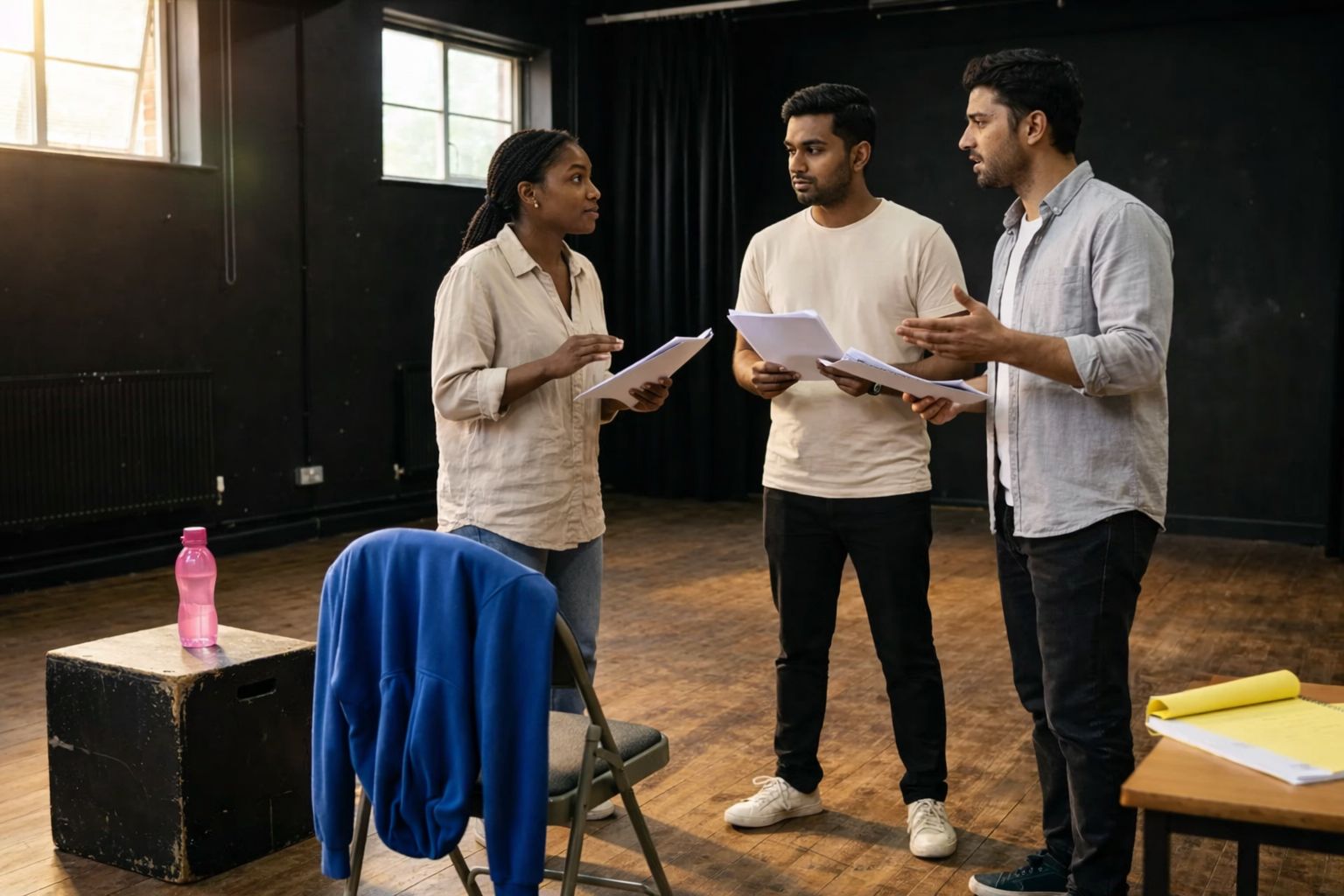
Course Duration
Choose the learning journey that suits your commitment and goals:
- 3 Months – Foundation exposure
- 6 Months – Skill-building & performance training
- 12 Months – Complete theatre & cinema immersion
Important
Fees are payable in full at the time of admission
All fees are inclusive of GST
Batch allocation is strictly age-based
Foundation Course
Theatre 101
Duration: 3 Months : Focus: Classical and Contemporary Theatre Foundations
Month 1: Voice, Expression & Classical Theory
- Voice training through structured theory and guided practical sessions
- Development of voice clarity, intonation, diction, and modulation
- Understanding vocal projection for stage performance
- Introduction to Nav Ras based on Bharat Muni’s Natya Shastra, with emphasis on emotional expression and rasa theory (theoretical study)
Month 2: Physical Training & Actor Awareness
- Practical application of voice and emotional theory through basic theatre exercises
- Body movement techniques and posture awareness
- Exploration of space, time, and rhythm on stage
- Development of mental and physical awareness for performance readiness
- Breathing exercises for control, stamina, and emotional delivery
- Introduction to body language as a tool of storytelling
Month 3: Theatre History & Performance Structures
- Study of Ancient Sanskrit, Greek, and Roman Theatre traditions (theory)
- Understanding various forms of stage performance
- Introduction to the Proscenium Stage and stage orientation
-
Detailed fundamentals of:
One-Act Play Structure Two-Act Play Structure Three-Act Play Structure - Breathing exercises for control, stamina, and emotional delivery
- Introduction to body language as a tool of storytelling
Course Conclusion:
- A fully rehearsed One-Act Play presented by students
(Duration: 20–40 minutes; play and language chosen democratically by the students) - Structured feedback session involving mentors, students, and parents
- Course completion certificates awarded
- Closing ceremony fully sponsored by Lumos Academy for Performing Arts
Intermediate Course
Theatre 201
Duration: 6 Months : Focus: Acting Techniques & Scene Work
Month 4: Revision & Acting Methodology
- Detailed revision of all concepts covered in Theatre 101
- Introduction to Constantin Stanislavski and his method acting systems
- In-depth study of the three pillars of Stanislavski’s Method:
-
An Actor Prepares – inner preparation and emotional truth
Building a Character – physical and psychological character development
Creating a Role – integrating text, action, and performance
Month 5: Applied Acting & Thematic Work
- Exploration of advanced acting themes through theory and practical workshops
- Character analysis and emotional continuity
- Improvisation and scene-based exercises
- Strengthening actor-to-actor interaction and listening skills
Month 6: Scene, Space & Structure
- Understanding the anatomy of a scene
- Detailed study of Mise-en-scène
- Two-Act Play Structure explored through practical rehearsal processes
- Blocking, timing, and stage movement refinement
Course Conclusion:
- A Two-Act Play staged by students
(Duration: 40–75 minutes; play and language chosen democratically by the students) - Post-performance feedback session with mentors, students, and parents
- Course completion certificates awarded
- Closing ceremony fully sponsored by Lumos Academy
Advanced Course
Theatre 301 (Theatre + Cinema)
Duration: 12 Months
Focus: Advanced Theatre Practice & Screen Acting
Months 7–9: Advanced Theatre & Performance Philosophy
- Consolidated revision of the first six months of training
- Understanding the Fourth Wall and audience engagement
- Advanced thematic exploration through text and performance
- Proscenium theatre studied in depth
- Practical application of:
-
When and why to break the Fourth Wall
Comparison between Brechtian techniques and Natya Shastra principles - Clear distinction between Stanislavski’s Method and Brecht’s approach
- Advanced understanding of the Three-Act Play Structure
Performance Milestone:
- A ticketed Three-Act Play staged at a reputed auditorium in Pune
(Duration: 60–120 minutes) - All production expenses borne by Lumos Academy
- Performance revenue shared exclusively among student performers
- Post-show feedback and discussion session
Months 10–12: Cinema, Camera & Film Craft
- Comprehensive revision of theatre training with cinematic application
- Introduction to Cinema and screen performance techniques
- Key differences between stage acting and acting for camera
- Key differences between stage acting and acting for camera
- Film appreciation through guided essay writing and discussions
- Understanding film blocking and camera movement
- Difference between theatre direction and cinematic direction
Technical Exposure:
- Lighting design fundamentals
- Sound design: sync sound and dubbing
- Law of Axis and visual continuity
- Basics of cinematography
- Basics of film editing
- Importance of holistic filmmaking knowledge for actors
Final Project & Graduation:
- In the final two weeks, students work as independent film units
- Each batch will script, direct, act, shoot, and edit one short film
(Duration: 5–20 minutes) under mentor supervision - Short films may be freely used and monetised by students
- Intellectual Property Rights shared equally among team members
- One-day in-house Film Festival at a preview theatre
- Screening followed by a feedback session
- Course completion certificates awarded
- Graduation ceremony and farewell
- Film Festival and Graduation ceremony fully sponsored by Lumos Academ